2026-04-20
How we reinvented the Armonia gardens
From a courtyard of fountains and hard mineral surfaces to a green world built for open-air events.
In February we began one of the largest transformation projects Armonia has taken on: rebuilding the gardens from the ground up.
The idea came from wanting the outdoors to be more than a good-looking backdrop. We wanted gardens an event could actually happen in, among the planting, in a setting with an atmosphere and an identity of its own.
From fountains to gardens
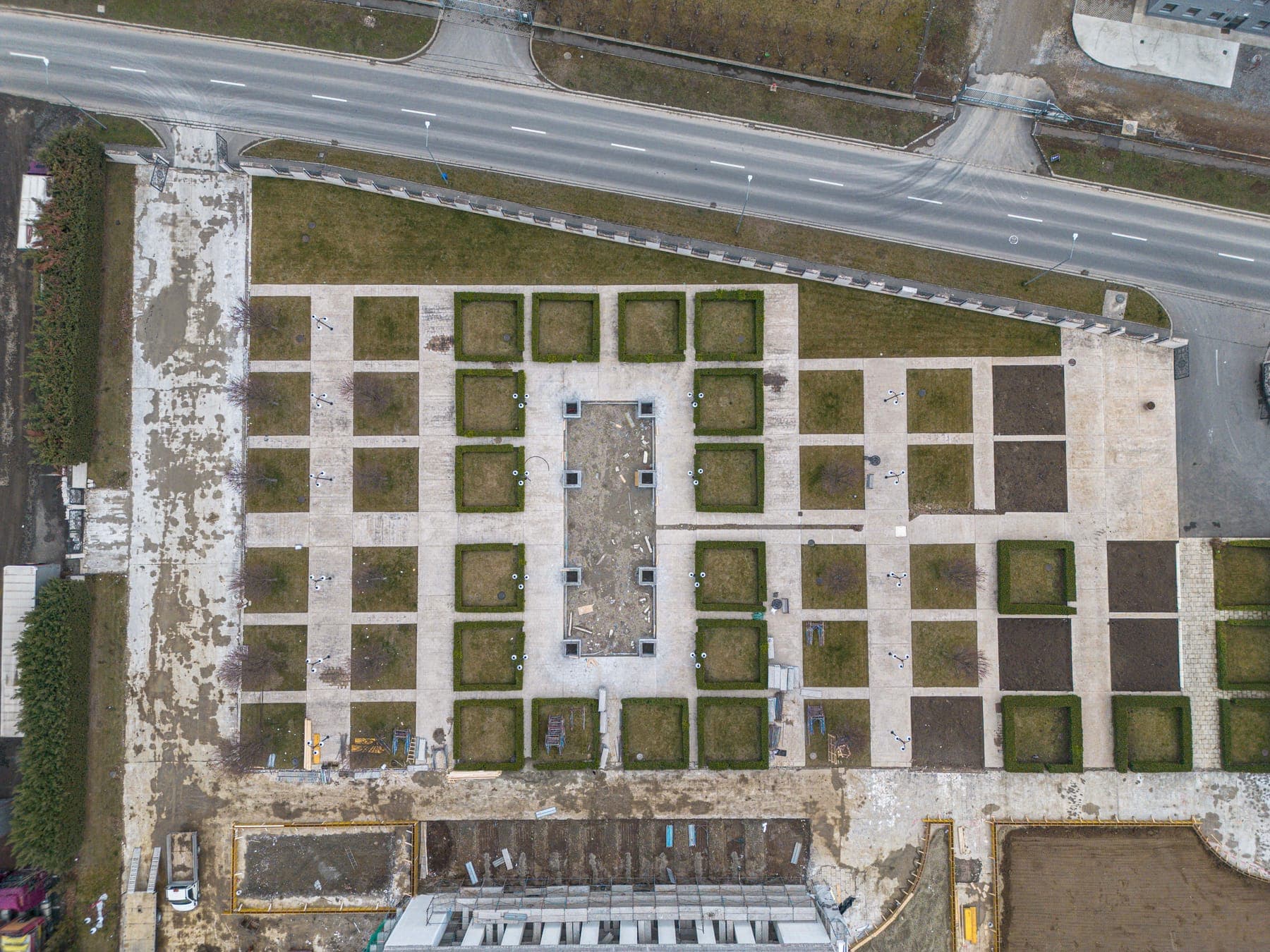
Before the transformation, the outside of Armonia was organised around geometric zones, fountains and hard mineral surfaces. For the new concept we chose to change that picture completely.
Before
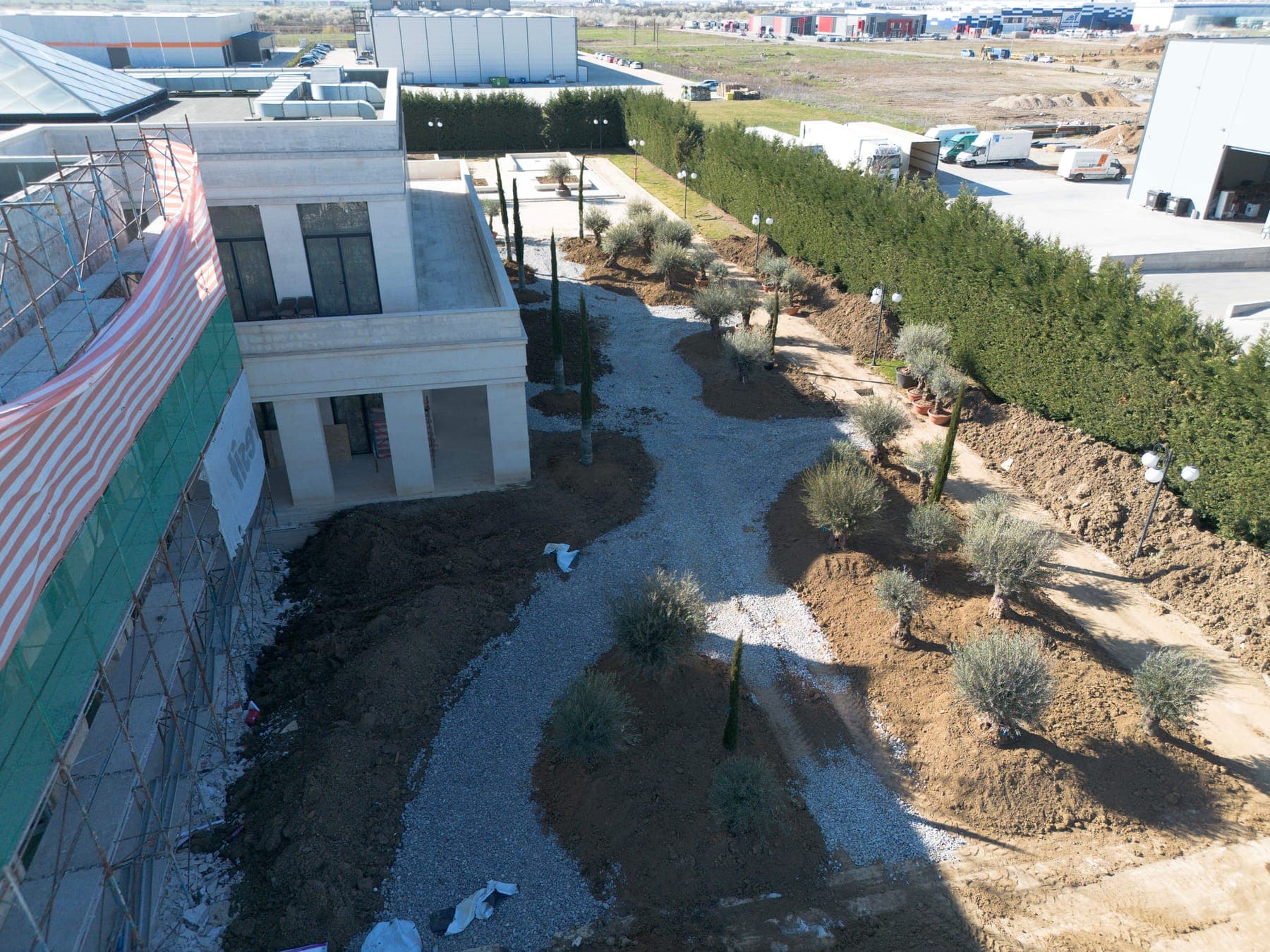
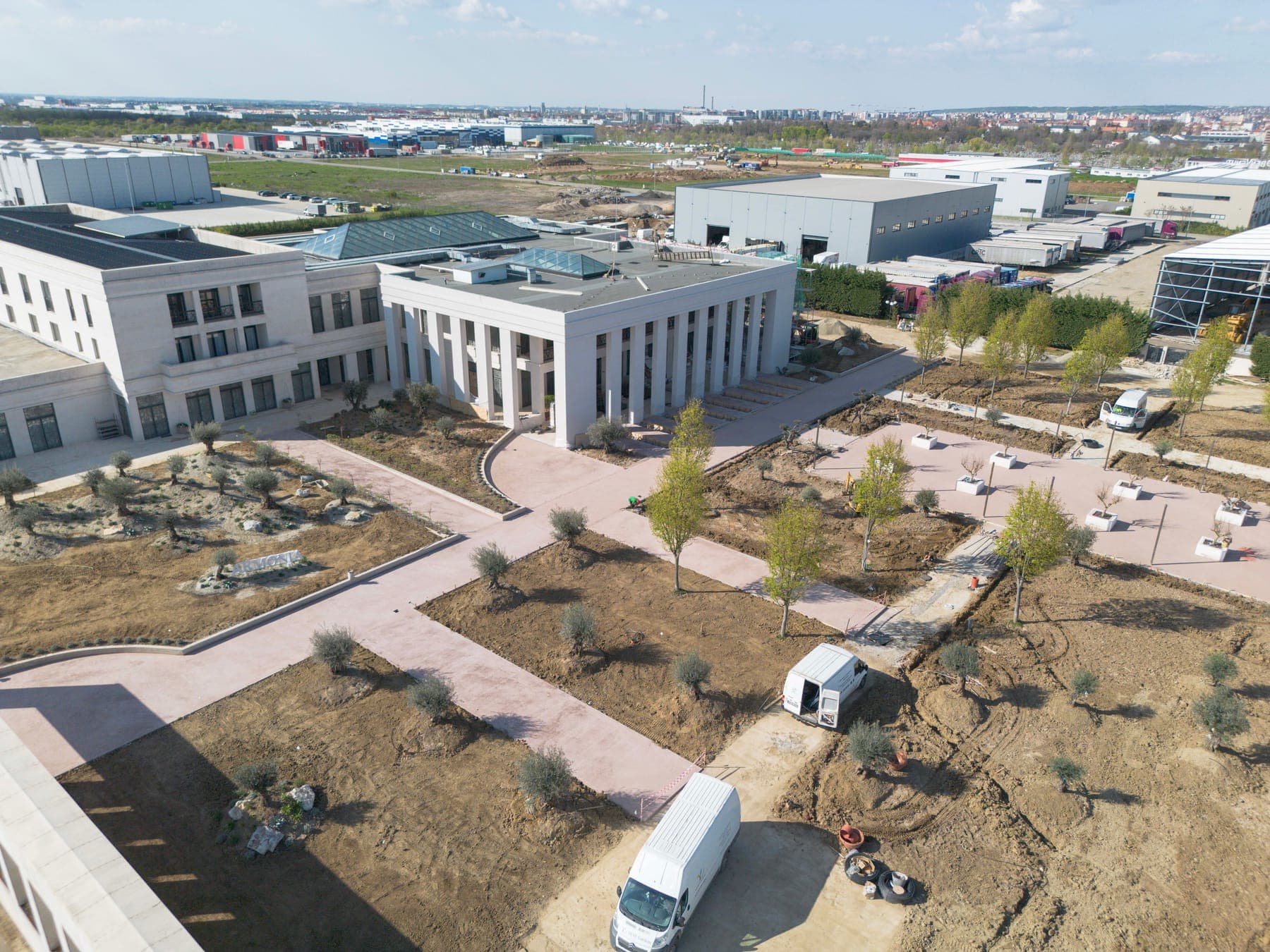
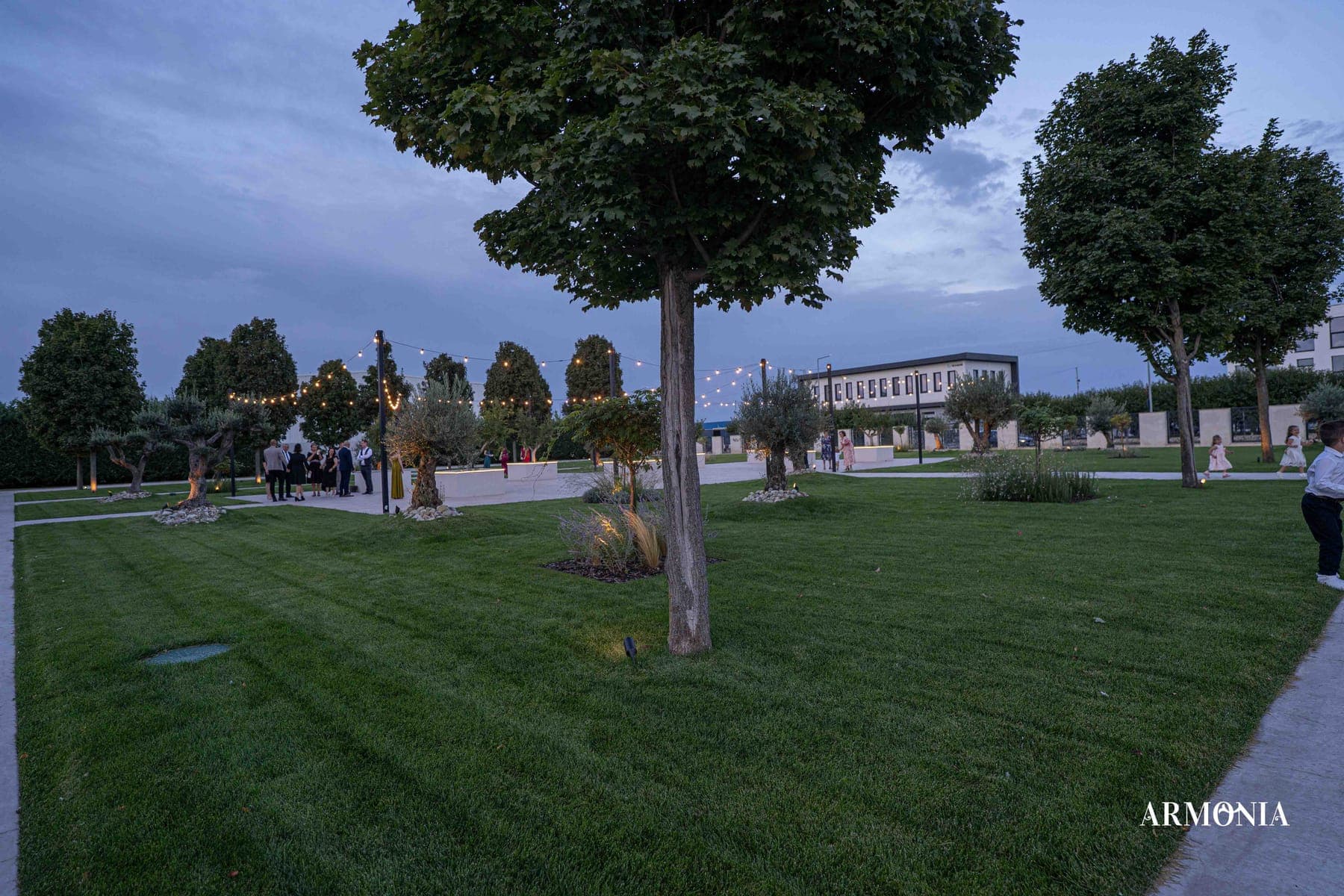
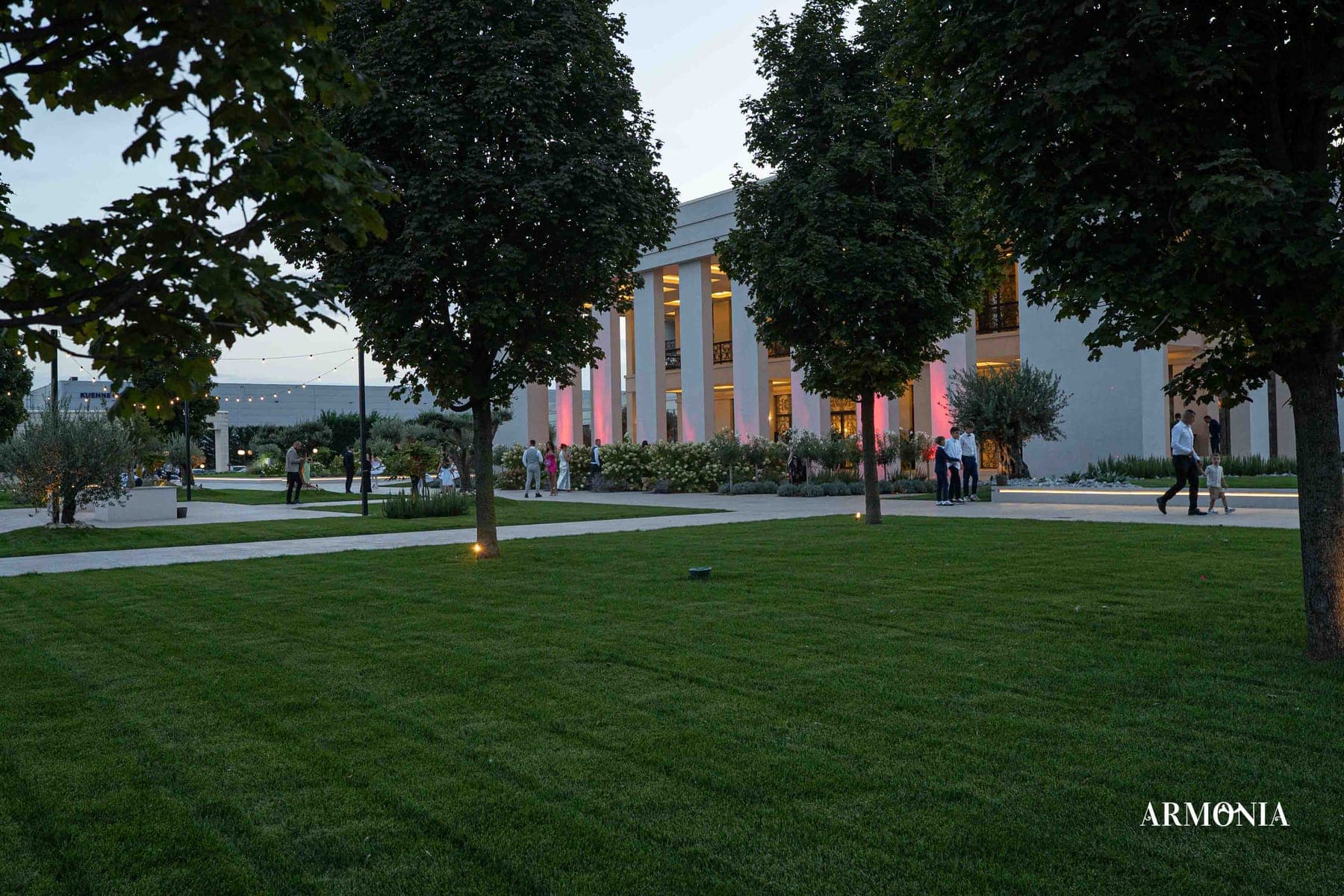
We broke up and filled in the pools, rebuilt the irrigation, redrew the paths and opened new ground for planting. What had been water became gardens — olive trees, lawn, and places that can be adapted for ceremonies, dinners or parties in the open air.
150 olive trees. 5,000 plants. 5,000 sqm of lawn.
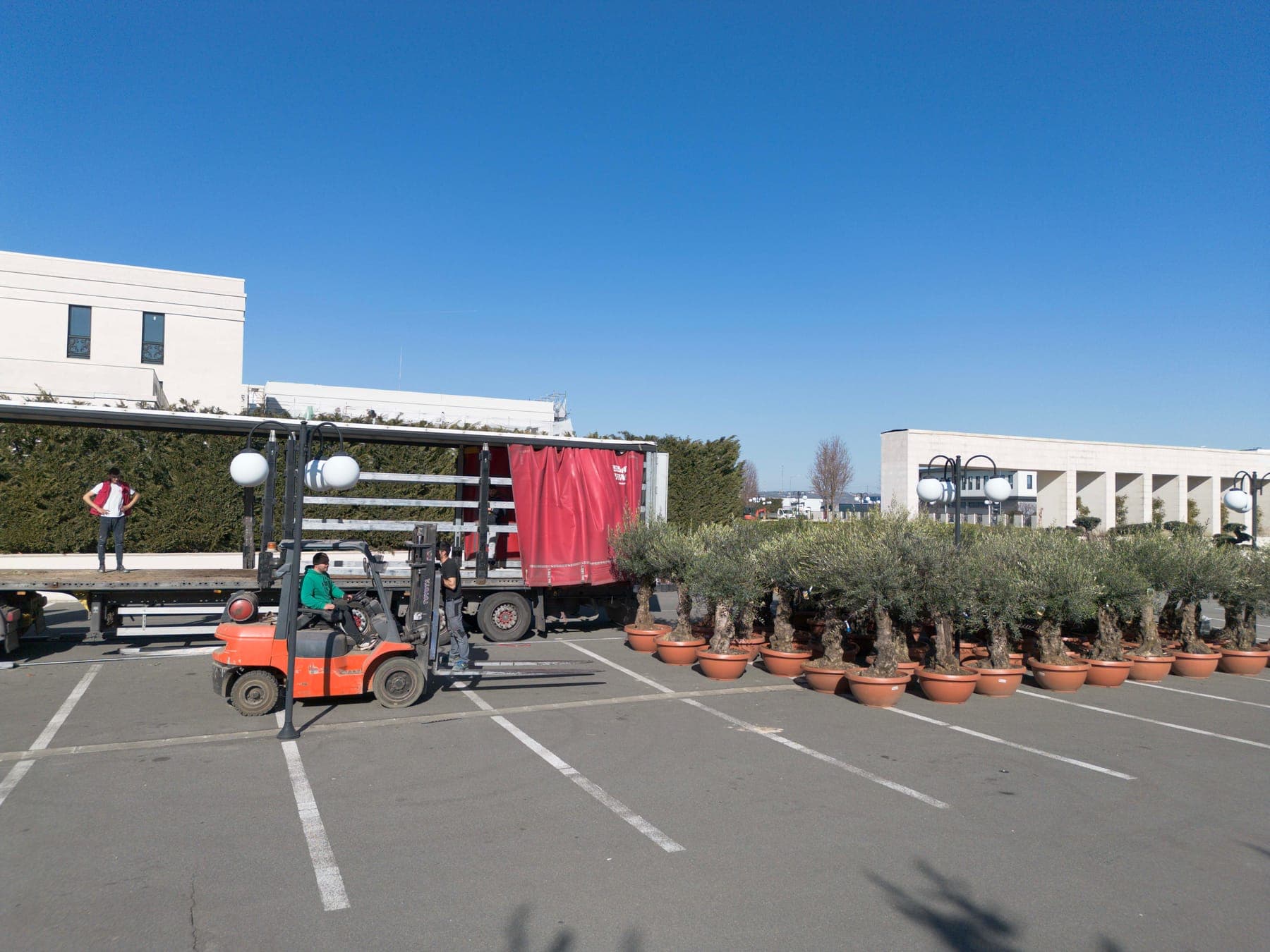
For the planting we went straight to the source. The plants and the olive trees were chosen in person in Italy and brought to Armonia in three lorries.
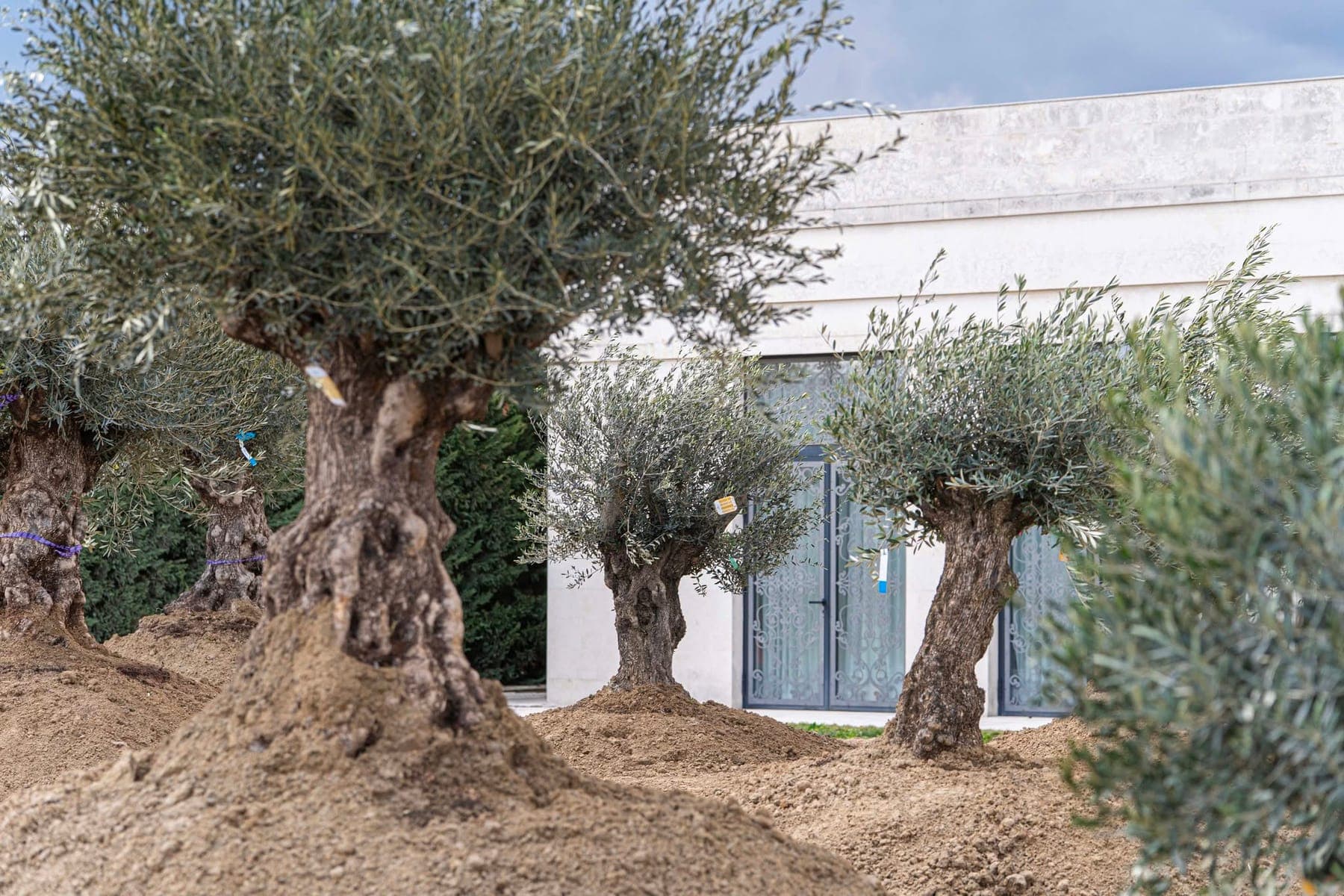
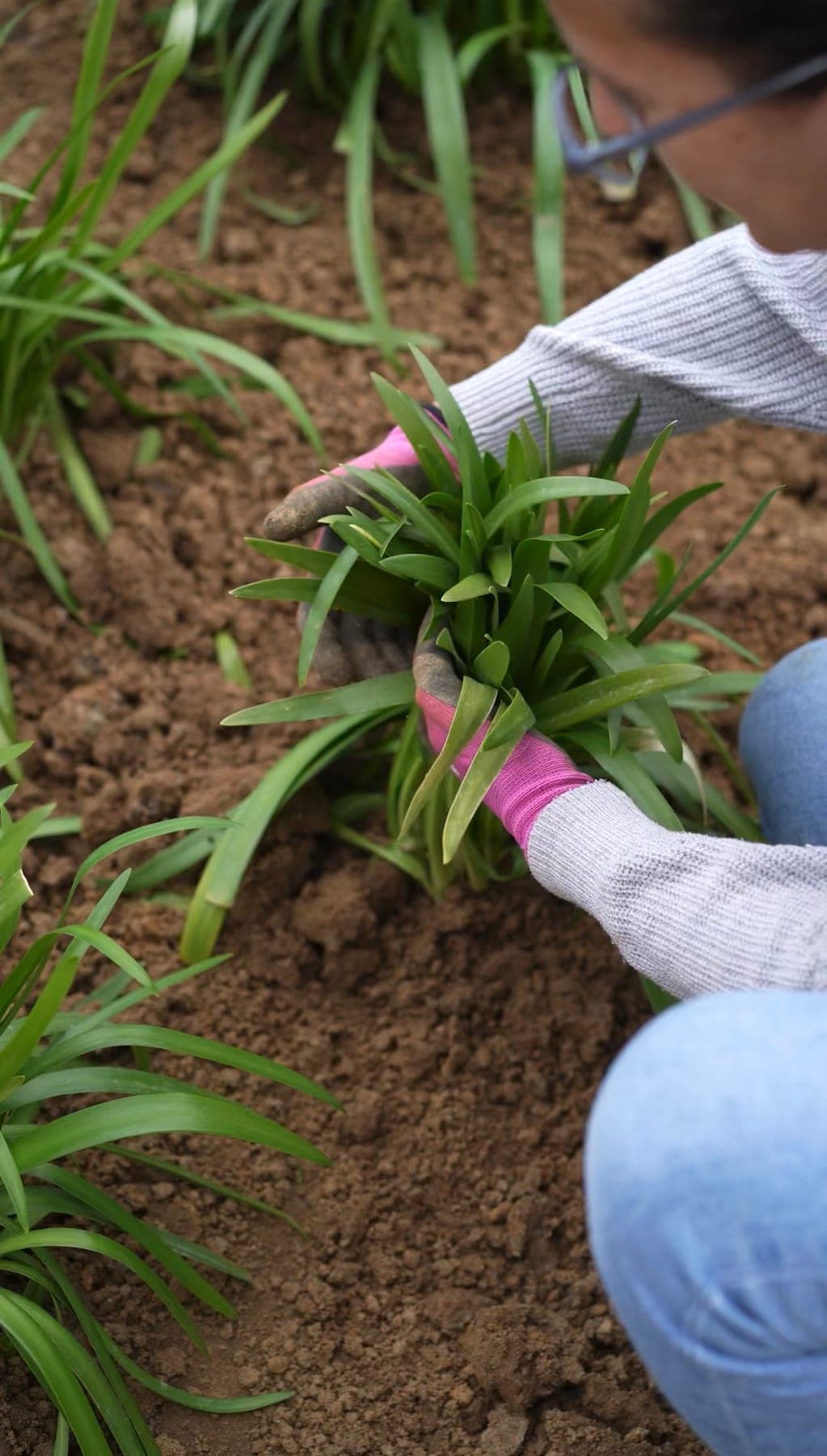
Among them are 150 olive trees over 200 years old, each with a different shape, texture and character. To those we added around 5,000 plants and 5,000 sqm of lawn, which would change the look of the place entirely.
We did not want planting that looked new and rigid, but planting that felt from the first day like a mature, generous, unforced place.
- olive trees over 200 years old
- 150
- plants brought from Italy
- 5,000
- square metres of lawn
- 5,000
- lorries from Italy
- 3
- months to transform it
- 2
A concept built together
The landscape concept was developed by Ionuț and Andrea, two inventive gardeners, together with the Armonia team.
The project was never only about planting. Every zone had to be rethought around how it would be used: how guests move through it, where a ceremony can be held, where a long table can be laid, where a cocktail or a party can happen, and what each of those moments would look like.
The planting became part of the event's set design.
Two months for a complete transformation
Time was the hardest part. Work started in February, and by April the whole exterior had to be ready for the event season.
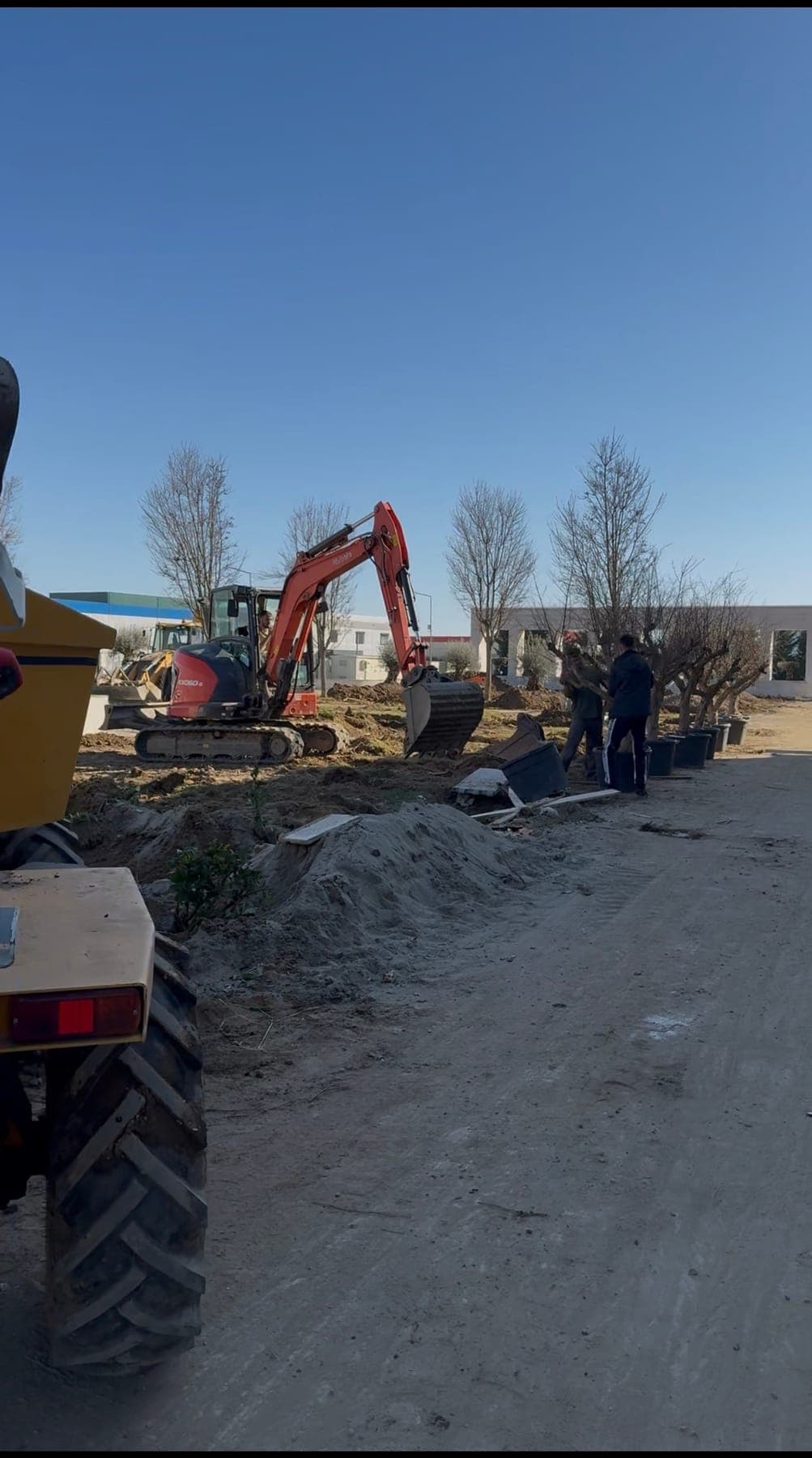
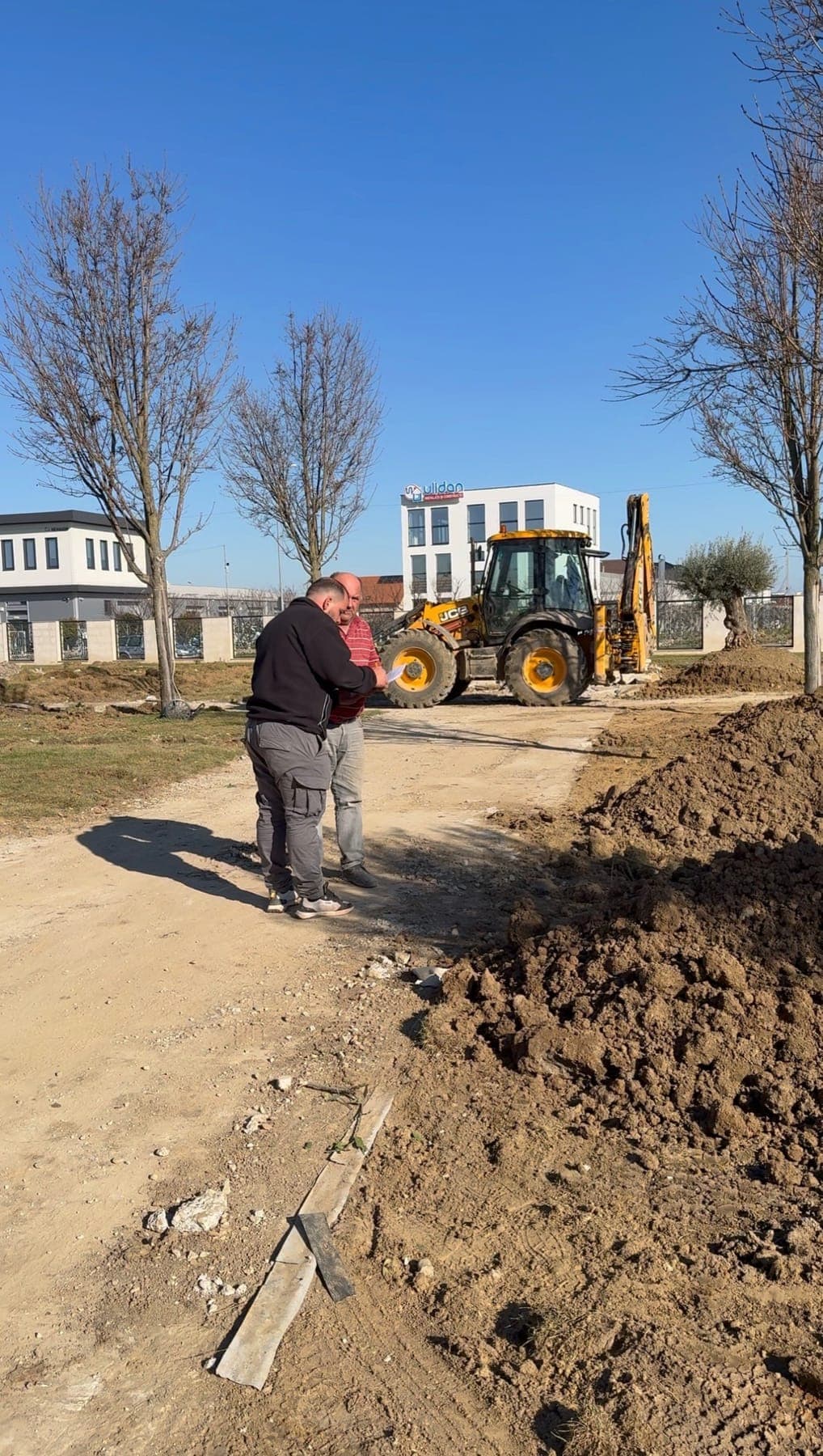
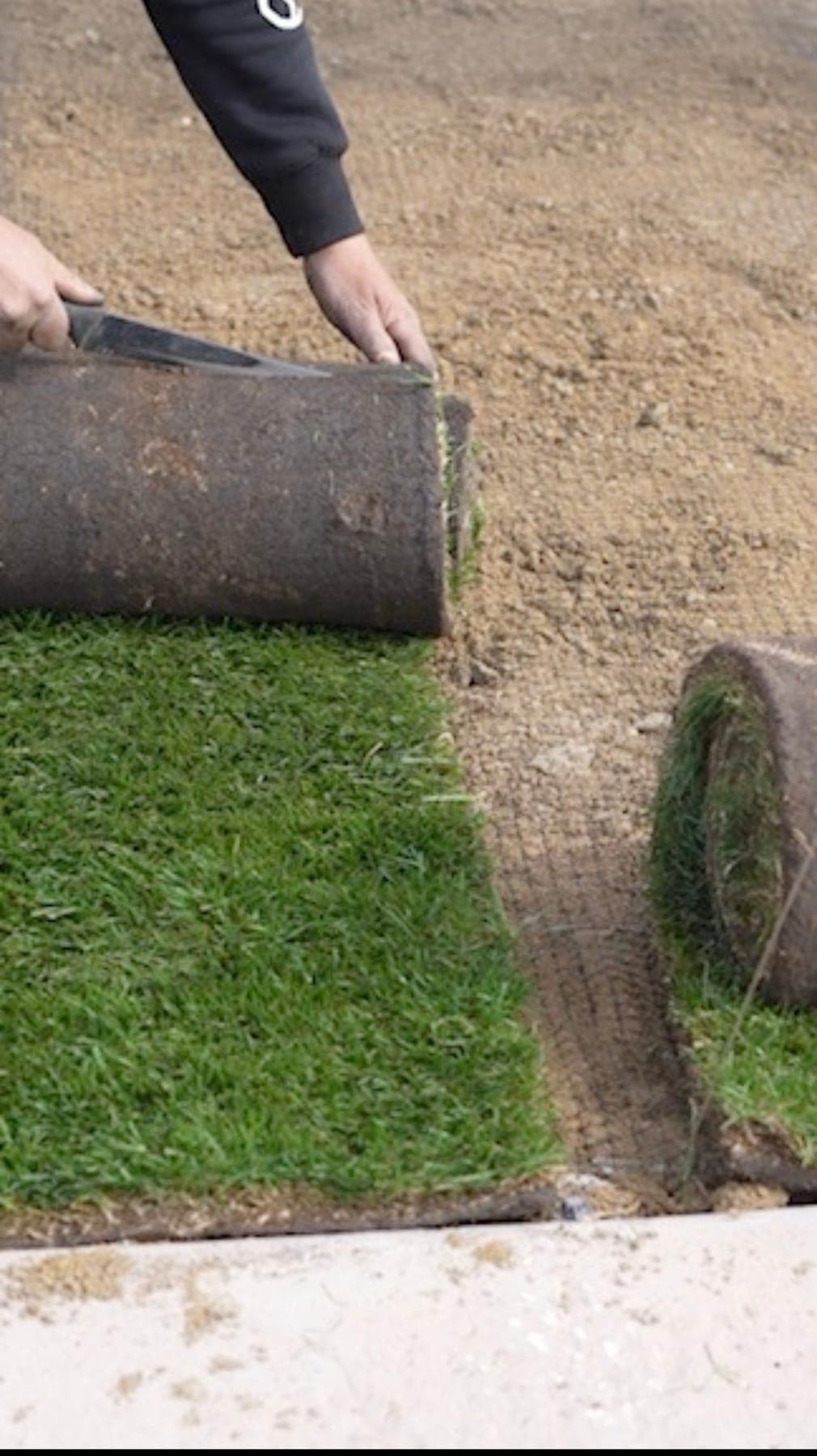
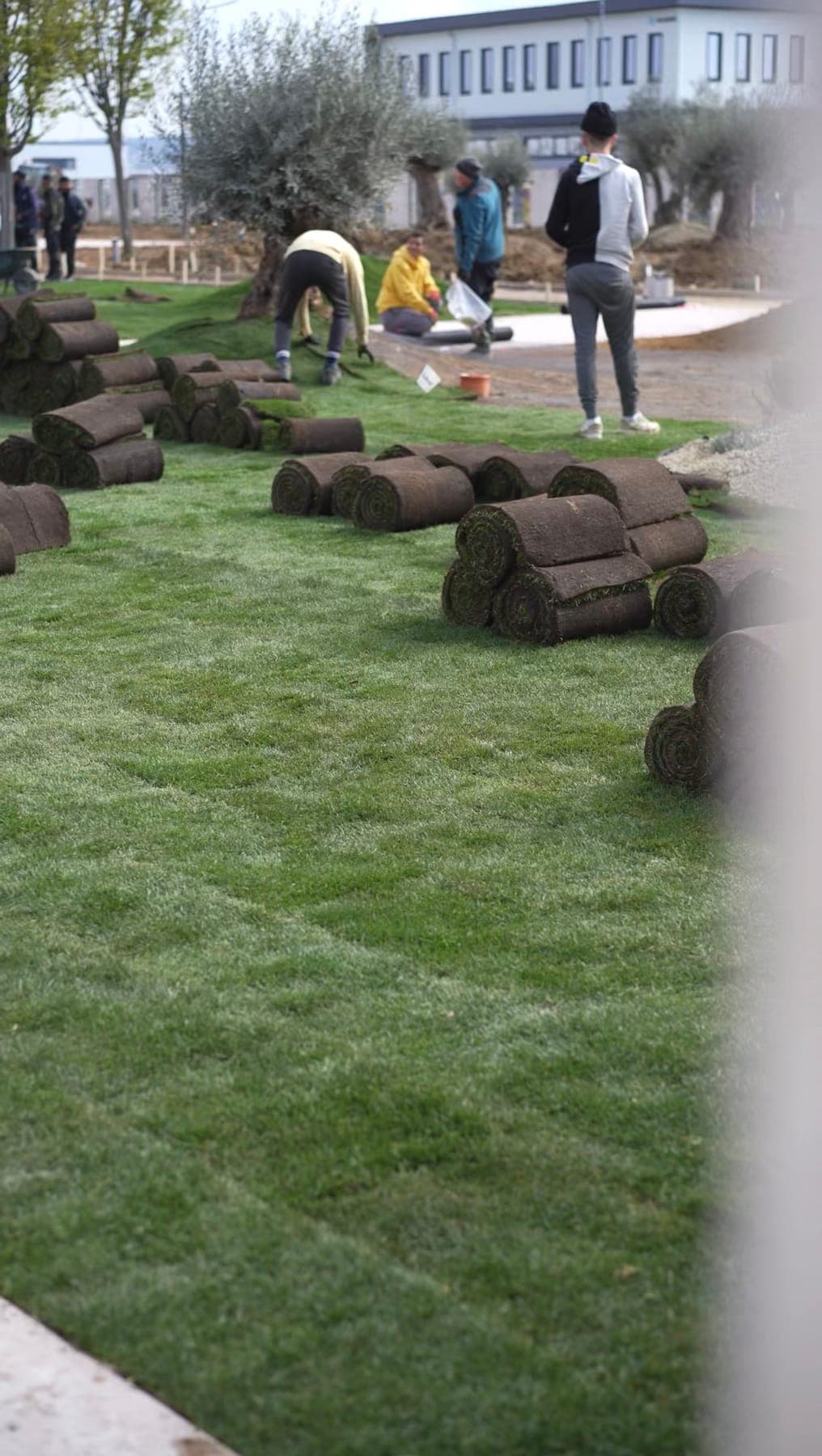
The transformation was carried out with Frango, a team of professionals who handled the job end to end: the construction work and the rebuilding of the existing areas, then the irrigation, the ground preparation, the planting and the laying of the turf. The pools were removed and absorbed into the new concept, the paths were rethought, and every zone was prepared for the gardens' new identity.
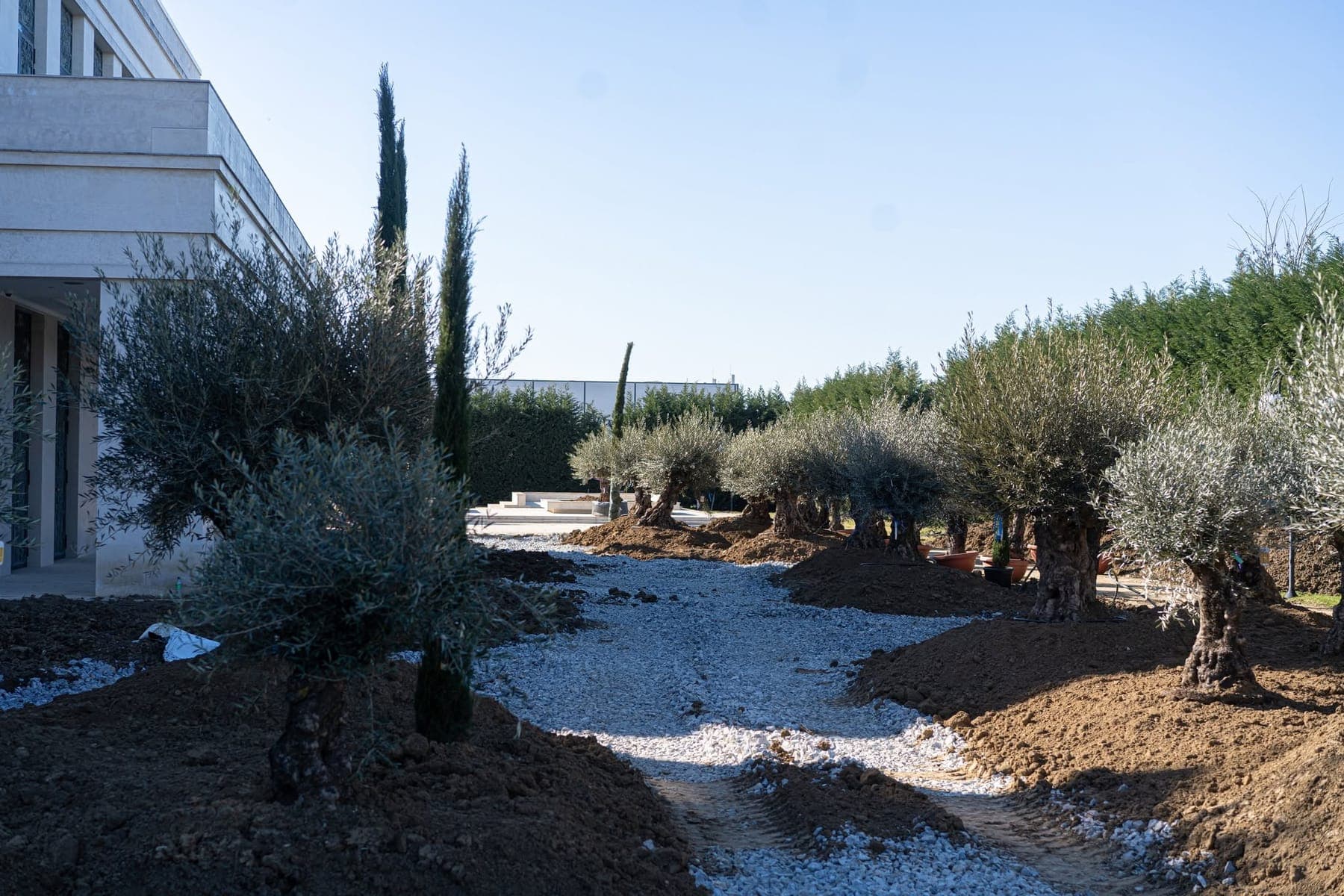
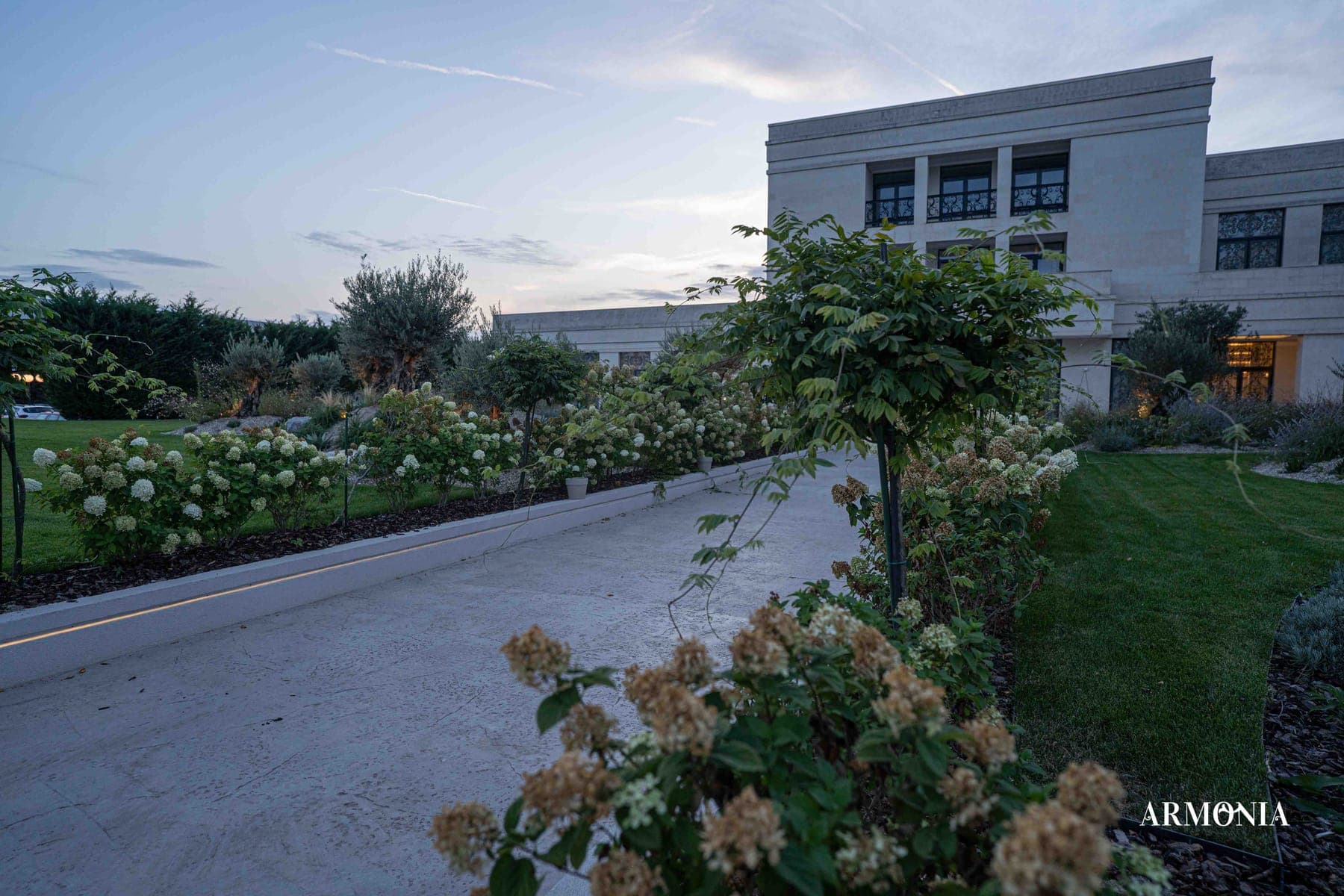
In parallel the olive trees and the thousands of plants from Italy went into the ground, and in two months the space changed completely: from a layout dominated by fountains and mineral surfaces to a green, mature landscape ready for open-air events.
During the works
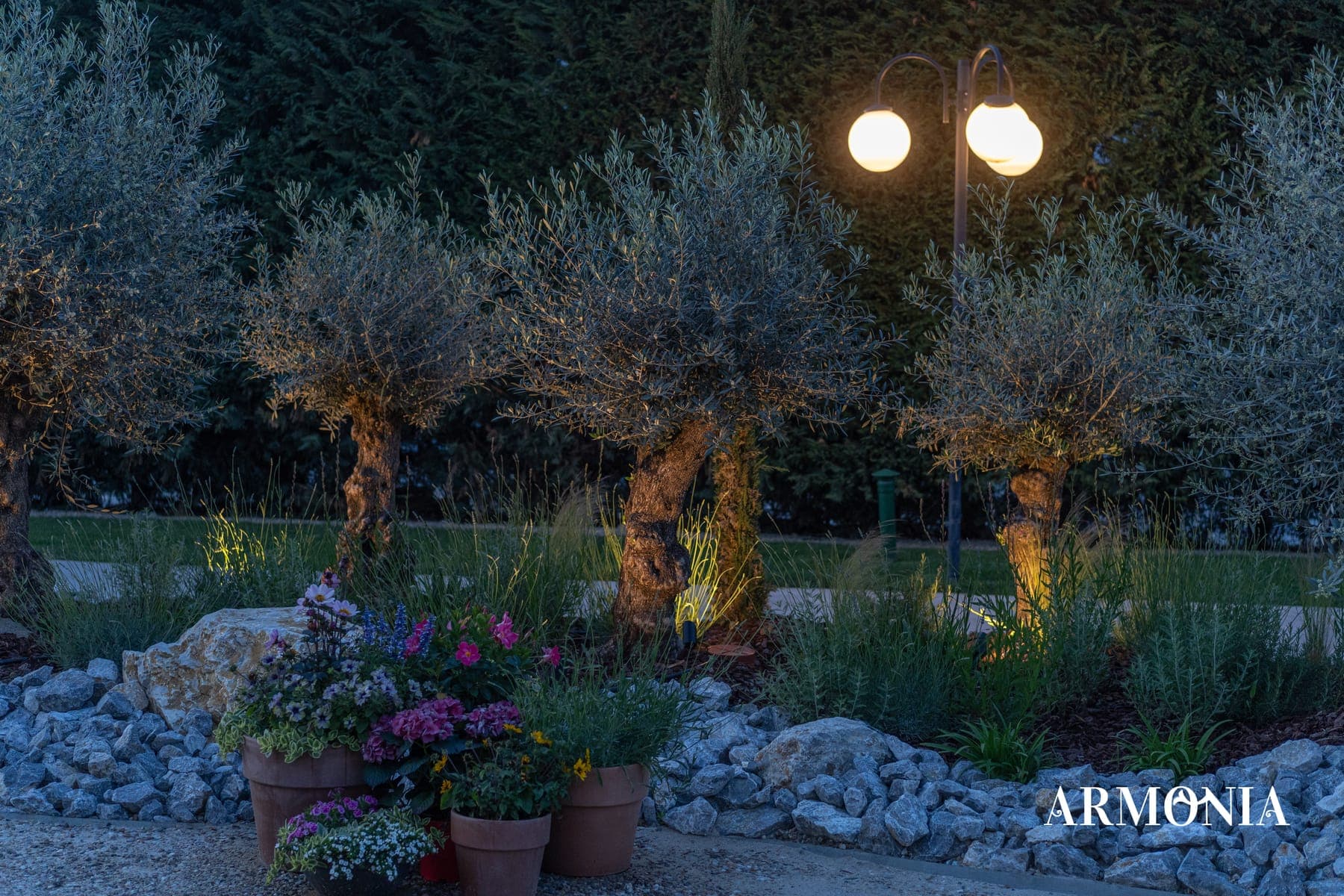
The Olive Garden
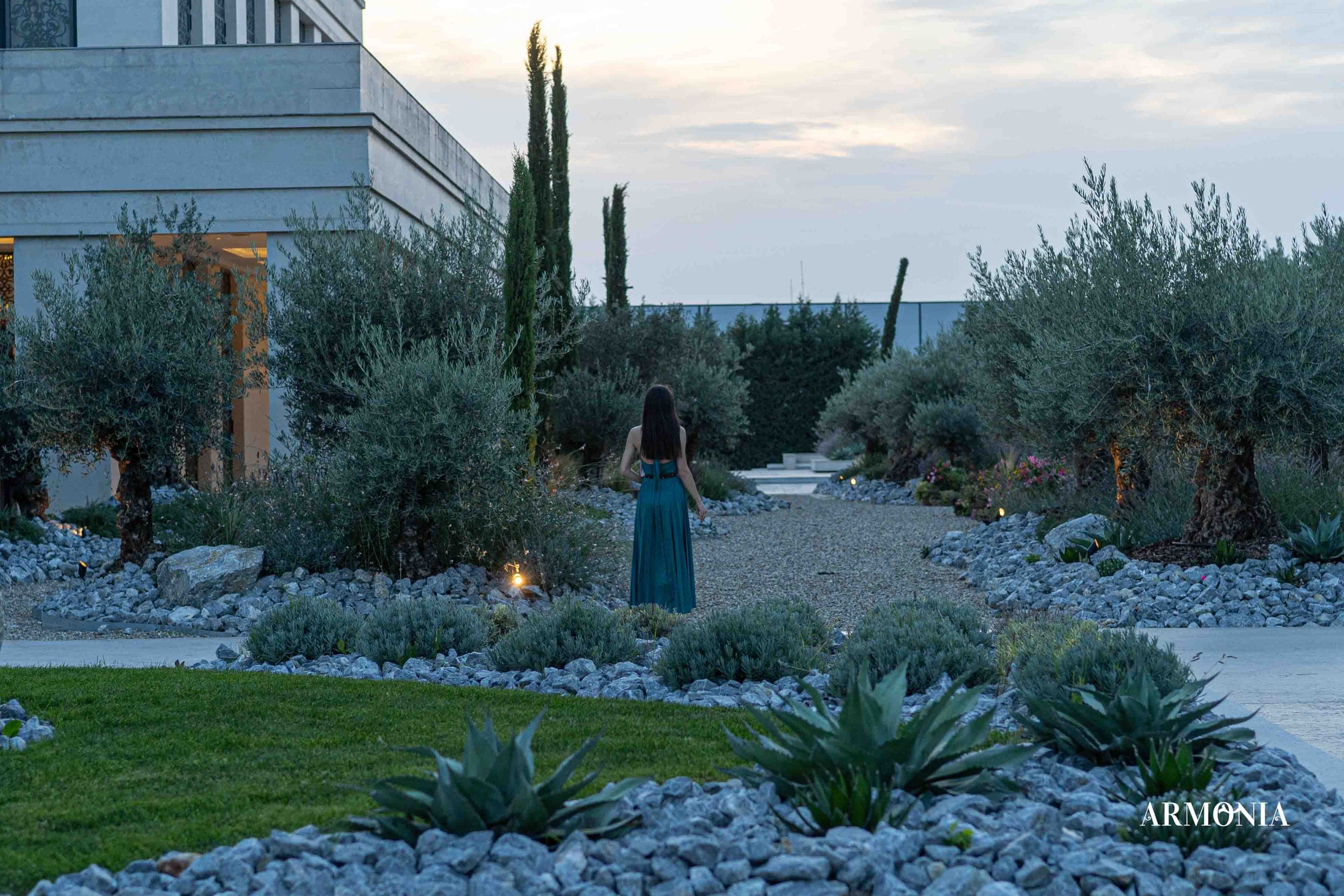
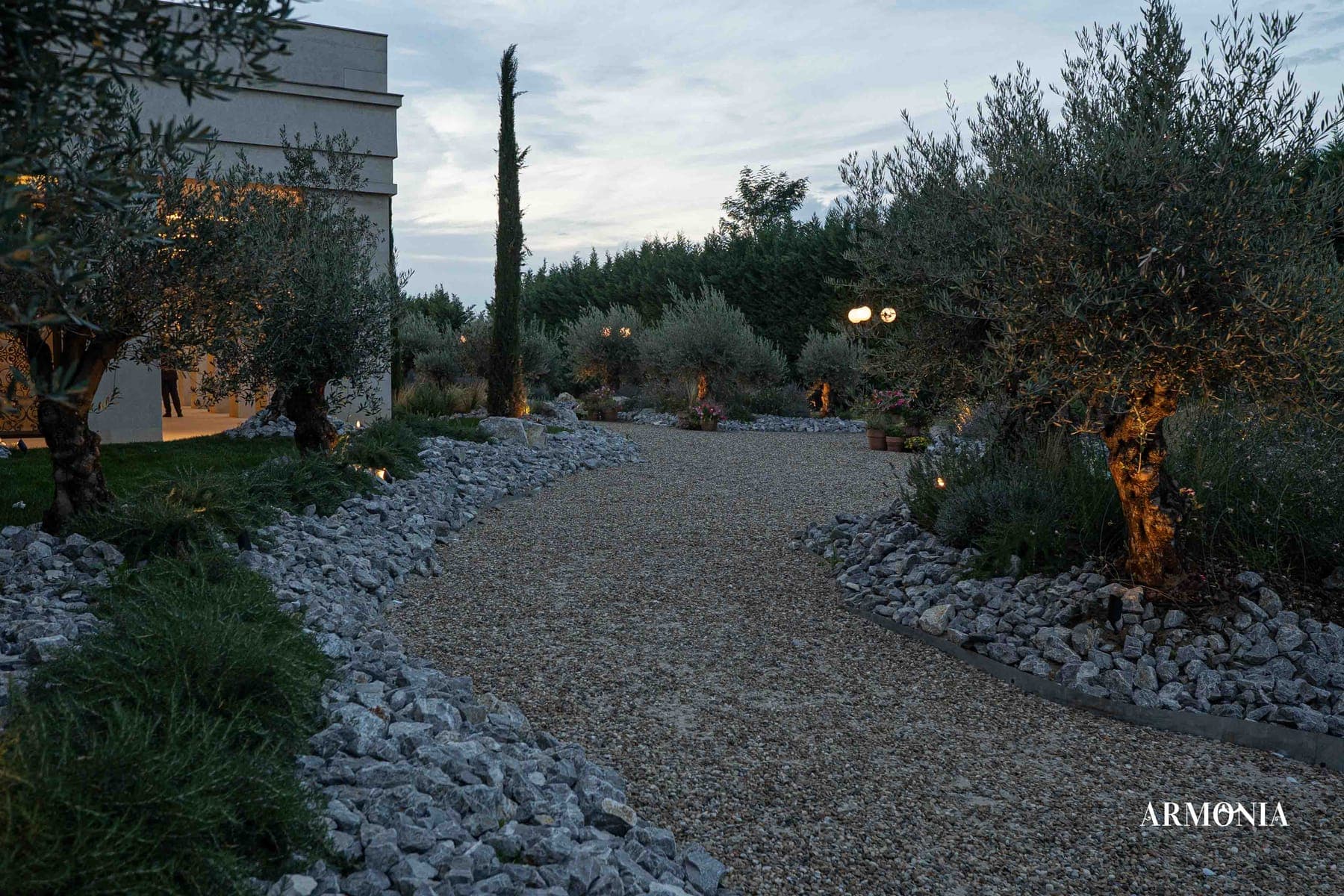
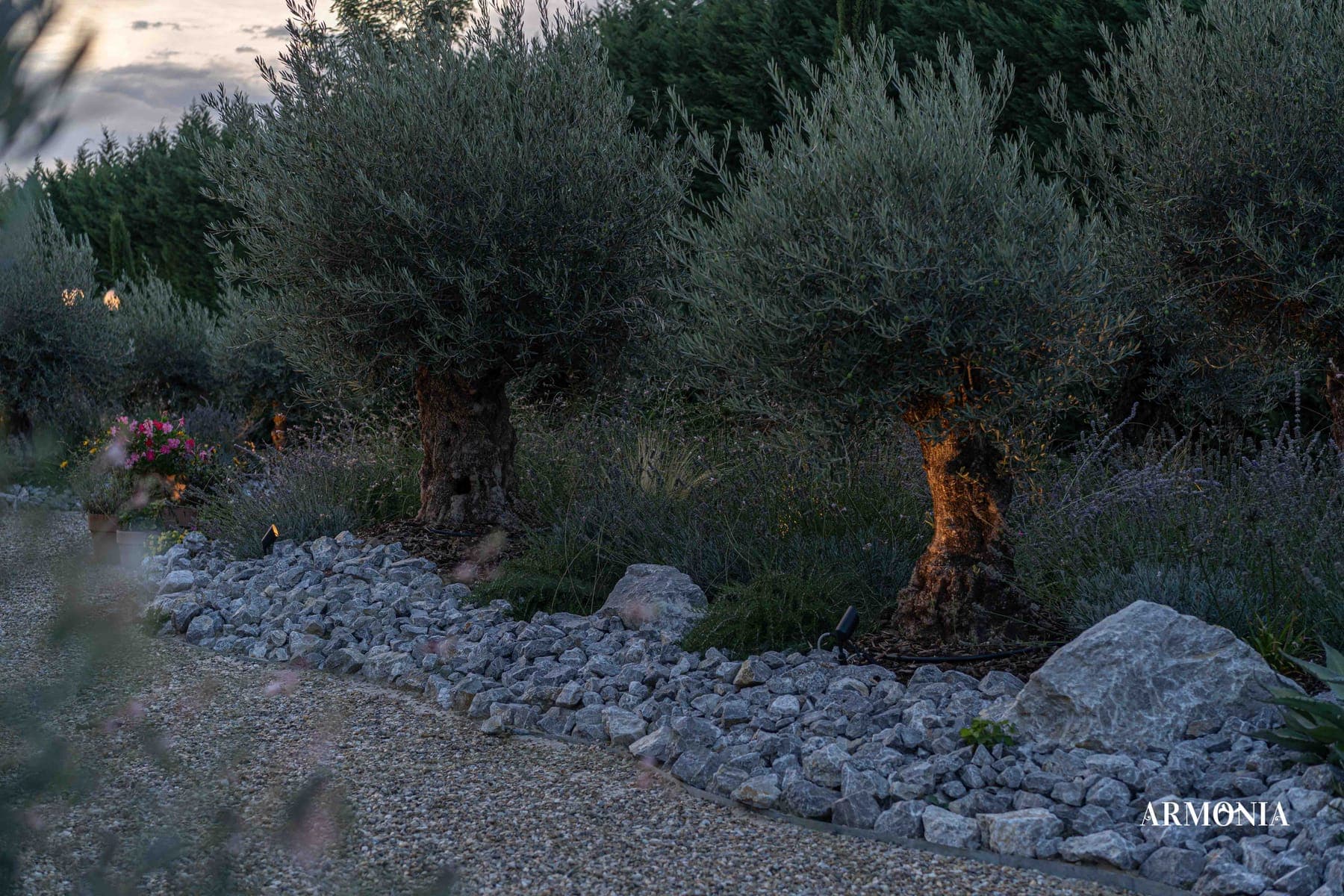
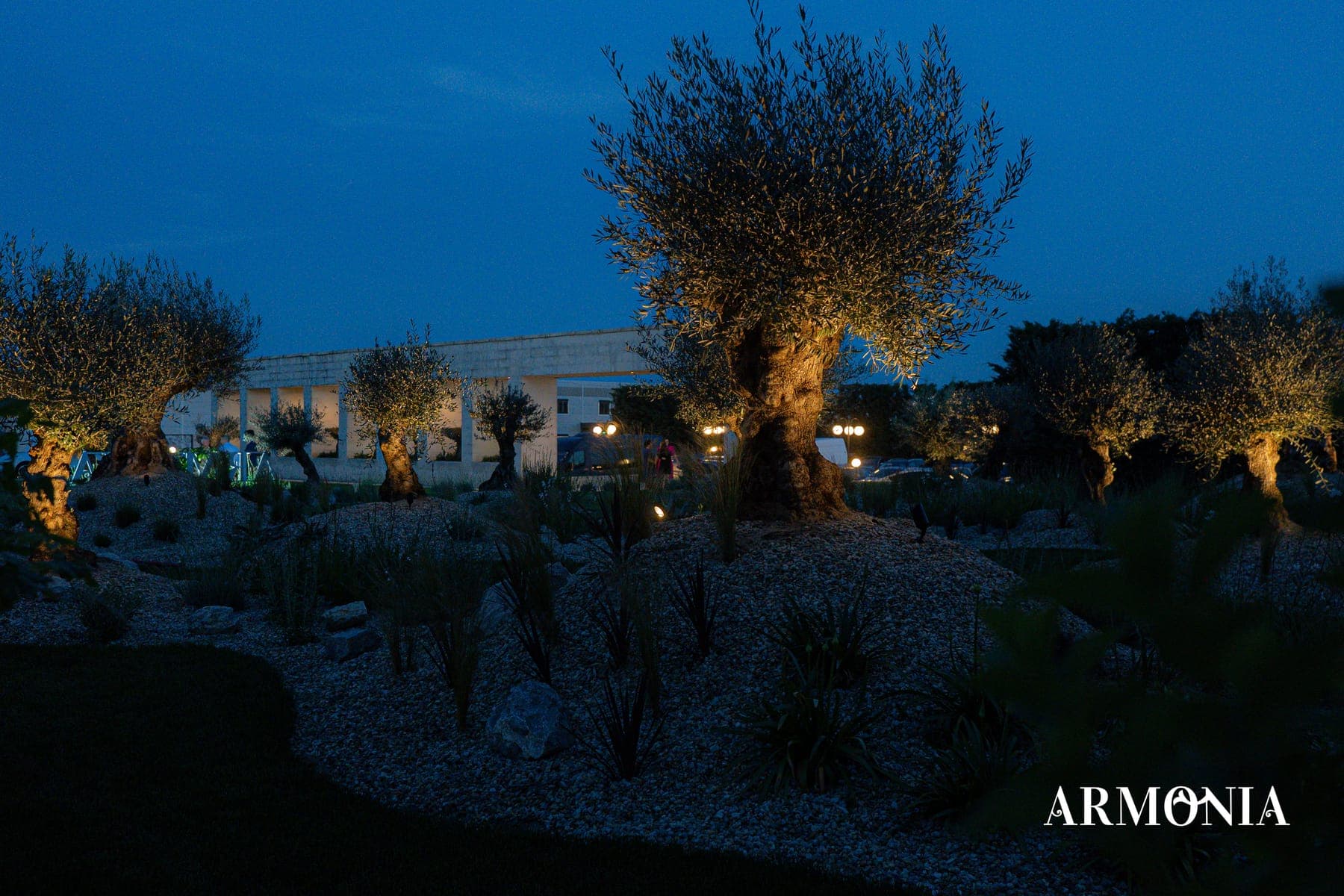
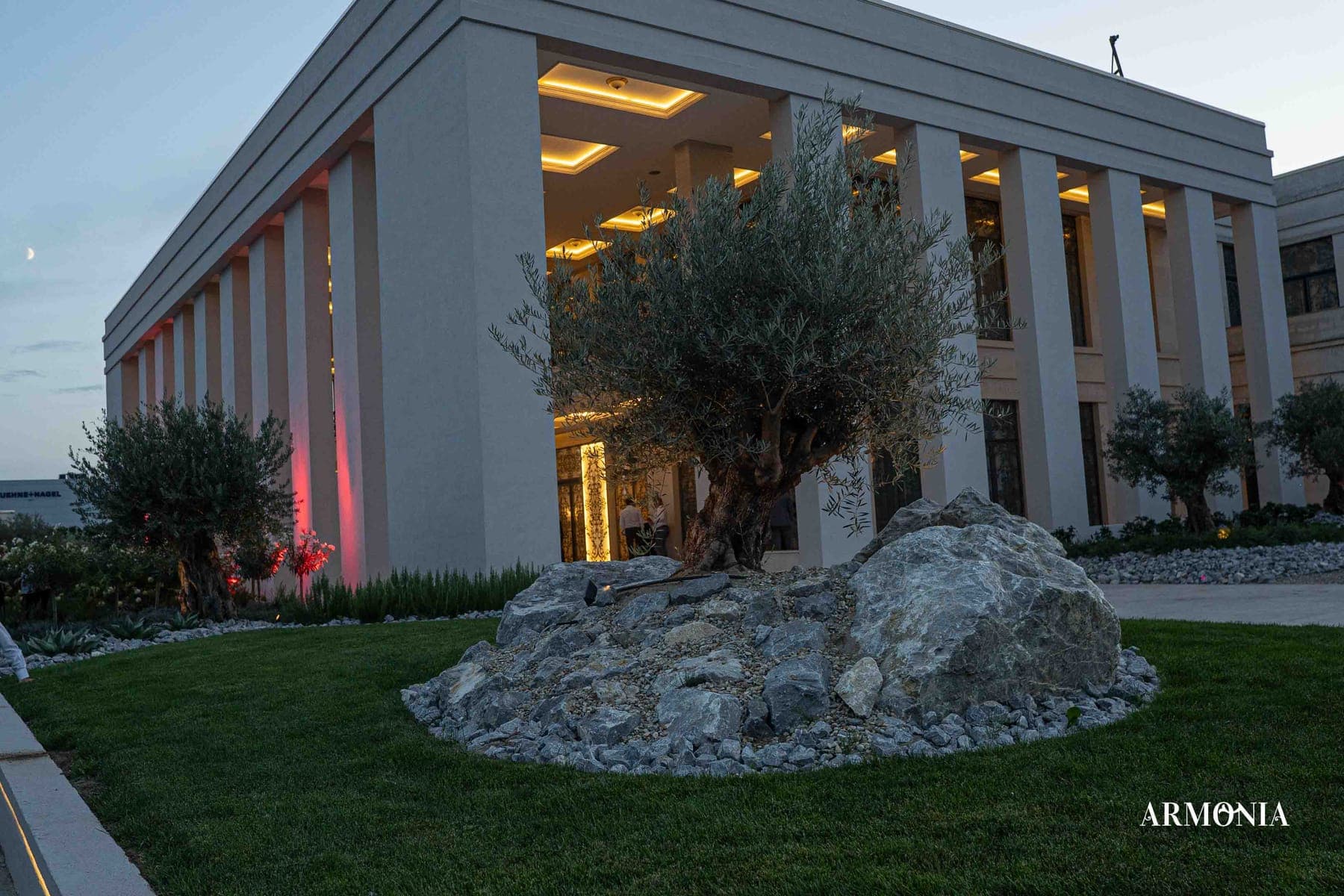
One of the most striking transformations is the area that is now the Olive Garden: gravel, centuries-old olive trees and Mediterranean planting, made for smaller events, with an atmosphere that recalls Tuscany.
Here the decor does not have to be built from nothing. The garden already is the decor. The olive trees, the gravel, the evening light and the planting make the setting for ceremonies, dinners outdoors, and events where nature becomes part of the experience.
The Olive Garden
More than a garden
The point of the transformation was not only a greener exterior. We wanted to change how an event at Armonia can be imagined in the first place.
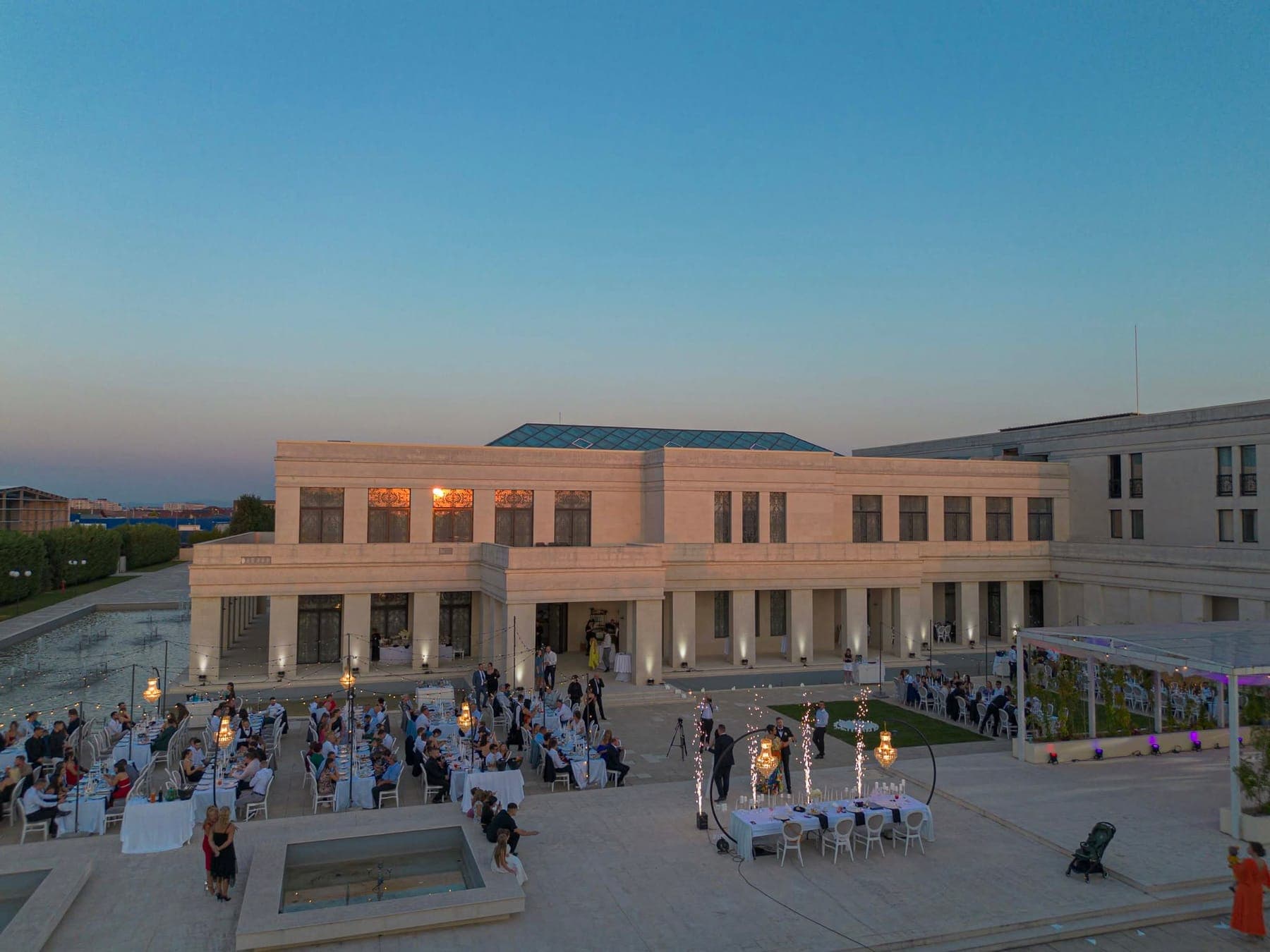
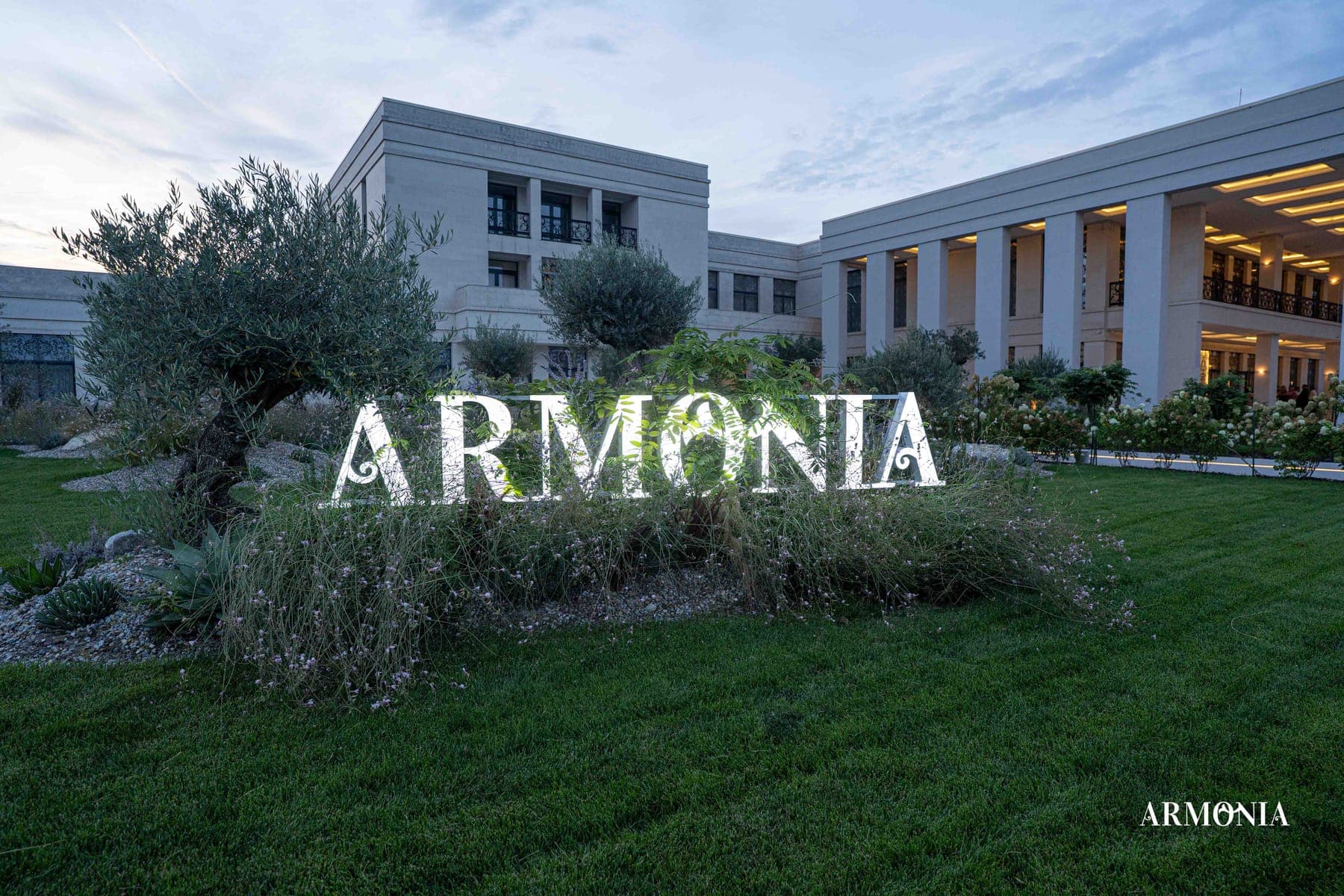
Today the gardens can be the whole setting of a day: ceremony and cocktails through to dinner and the party. Each zone offers a different atmosphere and the chance to build a concept around it.
After
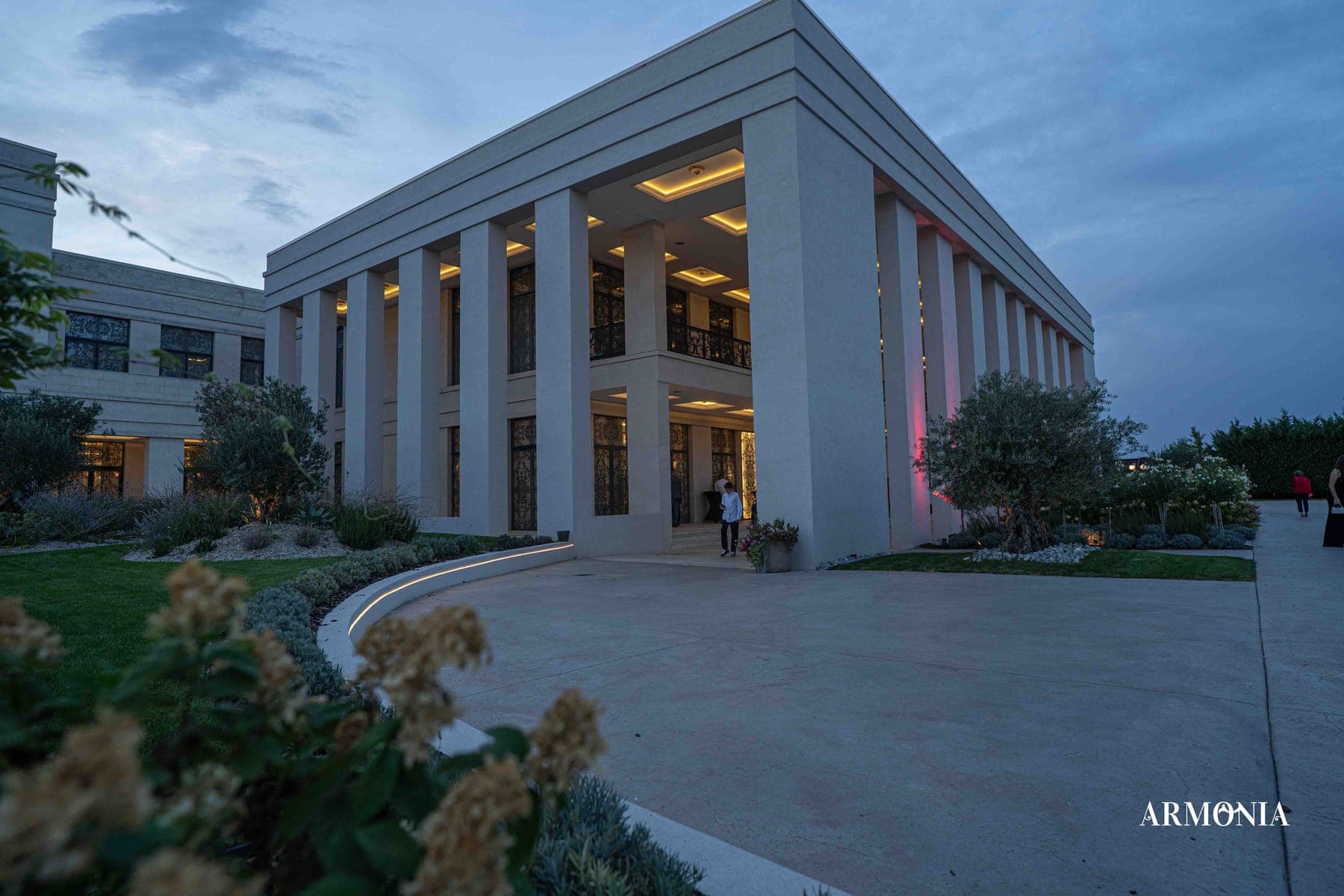
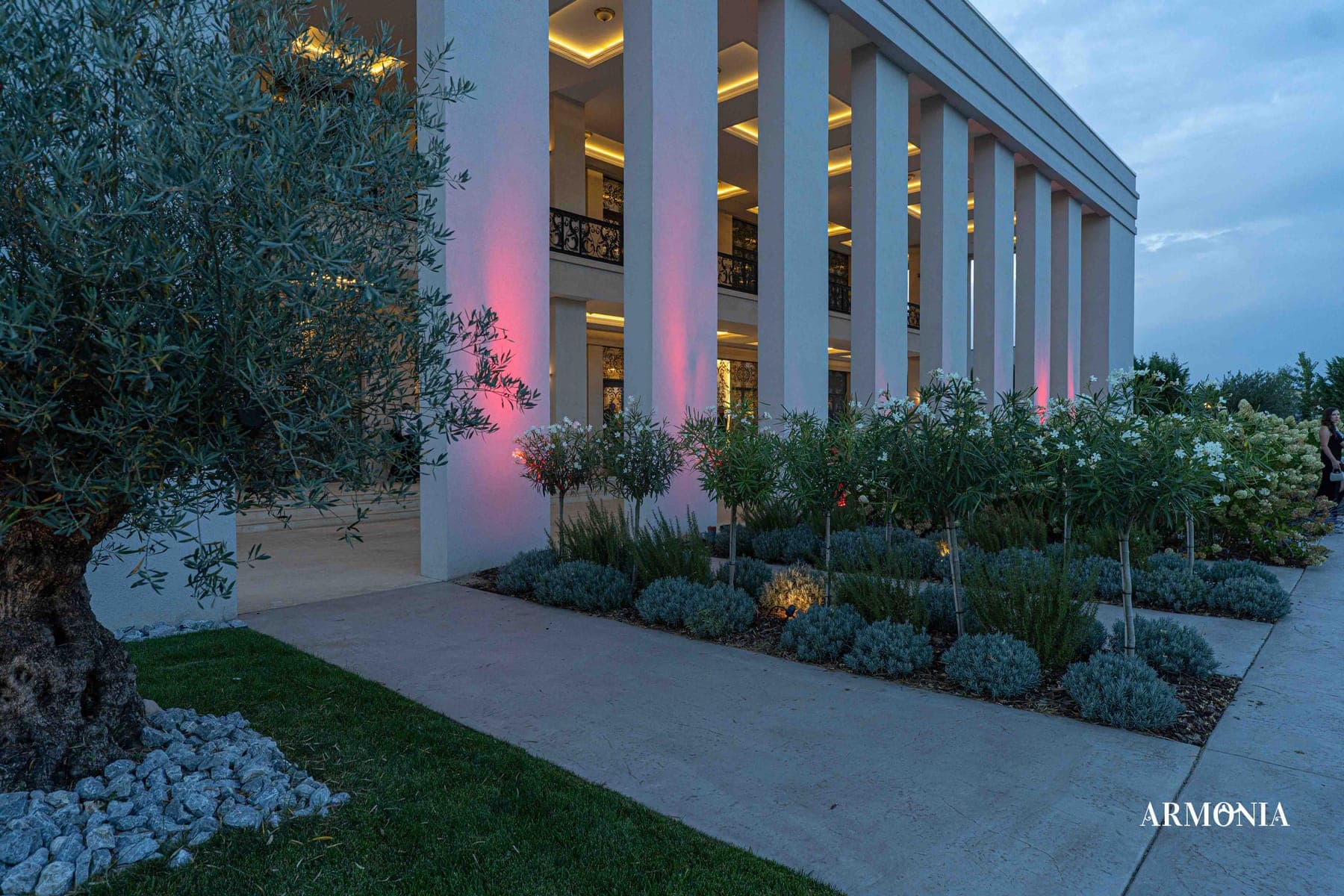
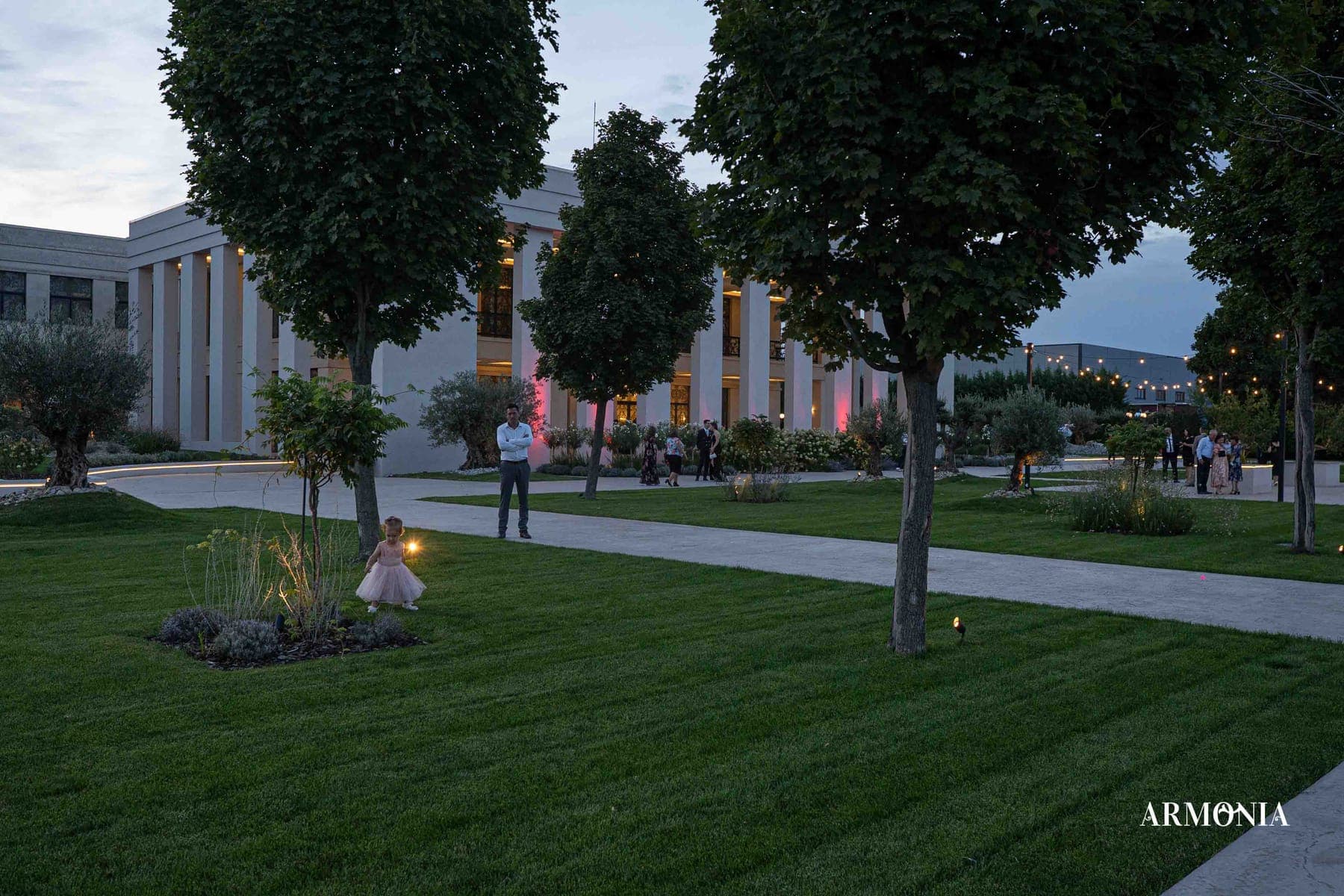
Two months. Three lorries from Italy. 150 centuries-old olive trees. Thousands of plants. And one idea: to build a place where events can genuinely live outdoors.
Today, what began as a project to transform the gardens has become one of the most important parts of the Armonia experience.